Multi
disciplinary
Mind.

there’s no ceiling to what you can learn & Excel

Ak

About

Amir

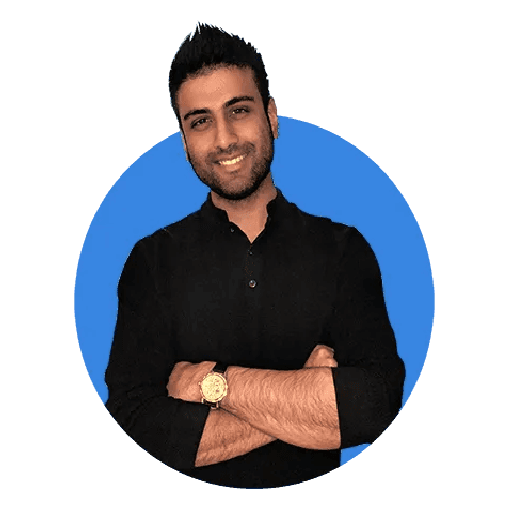
I’m Amir, a multidisciplinary entrepreneur who strives for balance, driven by a strong desire to learn and excel in my ventures like digital marketing, bird boarding, and pharmacy management. With no limits to my curiosity, I find inspiration in fitness, travel, and nurturing my growing family.

  • %
Blog

My Thoughts

Ideas are always better in print.

  • Personal Development

    A student of life long learning.

  • Philosophy & Wisdom

    Not succumbing to ones ego.

  • Business Insights

    Practical insights from experience.

  • Lifestyle & Updates

    Travel, Family & Love.

Blog

Read my Thoughts

  • October 23, 2025

    1. Building ThySelf

    Building Oneself: The Foundation of a Fulfilling Life

    I’ve always believed that the first pillar you should build is yourself. It’s the one thing you’ve got full control over, and it sets the stage for everything else—relationships, wealth, happiness.

    You can win the lottery and still end up broke if you haven’t worked on yourself. You can have great friends or a loving partner but still feel empty inside if you’re not solid on your own.

    Building oneself isn’t just important—it’s the most critical pillar of the three. It’s the foundation that dictates how you navigate life, how you handle setbacks, and how well you can build those other two pillars: relationships and assets.

    Developing oneself leads to:

    • Enhanced stress resilience
    • Greater resourcefulness
    • Improved physical health
    • Sharpened cognitive abilities
    • Increased emotional intelligence
    • Stronger problem-solving skills
    • Better time management
    • Expanded knowledge base
    • Improved interpersonal relationships
    • Sustained mental clarity

    With the tools, you can better manage and grow relationships, grow assets and build the other pillars.

    It’s All in Your Hands

    Unlike relationships, which rely on other people, or assets, which can be swayed by markets or luck, building yourself is entirely up to you. No one else gets a say in your personal growth. Your choices, habits, and mindset.

    You decide whether to hit the snooze button or get up.

    You choose whether to dwell on a failure or learn from it.

    This control is what makes self-development so powerful.

    I learned this the hard way. Years ago, I dove into World Financial Group with big dreams but ended up with zero sales and no earnings. It was a humbling experience, but it taught me that external success depends on internal growth. I hadn’t built myself enough to handle the challenges of that world. That failure pushed me to take responsibility for my own development, and it’s why I believe this pillar is non-negotiable.

    The Bedrock of Happiness

    Why is building oneself the most important pillar? Because it’s the root of everything else. A strong, developed self can find contentment whether you’re poor or rich.

    There are miserable millionaires and struggling extroverts who seem to have it all together on the outside but are crumbling inside.

    Happiness isn’t about what you have—it’s about who you are. When you work on yourself, you build the emotional muscle to find joy in any circumstance. You don’t need a fancy car or a perfect partner to feel fulfilled. A grounded self is enough.

    Back when I was at WFG as a licensed insurance sales rep, the team would talk about Jim Rohn’s teachings. I still remember learning from Jim Rohn about happiness, he said:

    Jim Rohn: “Happiness is not by chance, but by choice.”

    Since then, I have never once felt unhappy. Life naturally has periods of up and down, every down I have had, I happily went through it.

    It’s long been a stoic philosophy, Aristotle for example, who emphasized happiness as arising from deliberate virtue and mindset. Stoicism is a great methodology to develop oneself.

    This pillar paves the path to succeed in the other two.

    Mindset: The Engine of Growth

    Everything starts with mindset. I was lucky enough to stumble across Brian Tracy and Jim Rohn early in my journey, and their teachings left memorable impressions.

    They talked about choosing happiness, taking responsibility for your life, and embracing the idea that you’re always a work in progress and that stuck with me.

    A growth-oriented mindset means you see challenges as opportunities, not roadblocks. Also to not get waivered by uncontrollable. There was a quote I remember from Brian Tracy:

    There was a rainy morning and the door to door sales rep thought to himself that he can’t go out to work because of the rain. Whereas the other sales rep thought the rain was a blessing as most people will be at home due to rain. Also, all the other sales rep won’t be around.

    Same situation, 2 opposing views. It really goes to show how some people get ahead and others are limited by self-limiting beliefs.

    Once I realized that, that’s when I switched my thinking to solution oriented thinking. That mindset has been my anchor.

    Practical Steps to Build Yourself

    Building yourself isn’t some fluffy, abstract concept. It’s about consistent, intentional habits.

    For me, it started with consuming personal development content—books like The Compound Effect by Darren Hardy and The 4-Hour Workweek by Tim Ferriss opened my eyes to what’s possible.

    I’d listen to audiobooks during my commute or read a few pages before bed. Over a decade, those small habits added up, shaping how I think and act.

    Here are a few practices that have worked for me:

    • Goal-setting: Write down what you want, big or small. Brian Tracy’s Secrets of Self-Made Millionaires taught me to get specific and break goals into actionable steps.
    • Self-reflection: Take time to check in with yourself. Journaling or even just thinking through your day helps you spot patterns and areas to improve.
    • Time management: Prioritize what matters. I learned to cut out distractions and focus on what moves the needle.
    • Continuous learning: Read, listen, watch—whatever works for you. Find mentors, whether in person or through books and podcasts.

    These aren’t quick fixes. They’re disciplines that compound over time.

    Embracing Setbacks

    Setbacks are part of the game. My time at World Financial Group was a flop, but it wasn’t a waste. It forced me to get serious about personal growth. Failures like that build character and clarity. They show you what you’re made of and where you need to grow. The key is to not let them define you. Instead, treat them as data—valuable lessons that make you stronger.

    Every time you fall and get back up, you’re reinforcing this pillar. You’re proving to yourself that you can handle whatever life throws at you. That’s what resilience is, and it’s built through the grind of self-development.

    Famously said by Rocky: “Let me tell you something you already know. The world ain’t all sunshine and rainbows. It’s a very mean and nasty place, and I don’t care how tough you are, it will beat you to your knees and keep you there permanently if you let it. You, me, or nobody is gonna hit as hard as life. But it ain’t about how hard you hit. It’s about how hard you can get hit and keep moving forward; how much you can take and keep moving forward. That’s how winning is done!”

    Lifelong Learning

    Personal growth isn’t a one-and-done thing. It’s a lifelong journey. I made this my background picture on Facebook (When it wasn’t Meta, and when it was still popular back in early to mid 2010s) to reinforce it.

    By relentlessly building yourself through intentional habits and resilient mindsets, you forge an unshakable foundation for a life of purpose, happiness, and enduring success.

  • Introduction to My Personal Development Journey

    Over the years, I’ve read countless self-help and personal development books. My journey started around 2013–2014 when I began listening to audiobooks on YouTube. The spark came during my undergrad when I was hunting for summer jobs on Kijiji. I landed an interview with World Financial Group, knowing little about them—and maybe that was a good thing. The people there were enthusiastic, energetic, well-dressed, and brimming with optimism about the future. I was hooked and joined their team.

    I spent a year with them, earned no money, and sold exactly zero insurance products despite getting my LLQP license. But what I gained was invaluable. The office emphasized learning and honing salesmanship, which led me to a life-changing YouTube video: Secrets of Self-Made Millionaires by Brian Tracy (https://www.youtube.com/watch?v=KAGn_k1jHsY&t=24s). That moment opened the floodgates. I dove into books like The Compound Effect and The 4-Hour Workweek, and I soaked up wisdom from Brian Tracy, Jim Rohn, and other personal development giants. A decade later, I’m still at it, and I plan to keep going.

    One thing I noticed about audiobooks is that retention is lower compared to reading a physical book. And reading a book, while powerful, offers less personal growth than writing one. So, I’m taking the leap—from listening to audiobooks, to reading, to now writing my own personal development book. I’m writing to an audience, but I picture an empty auditorium. If someone walks in and finds value in my words, that’s fantastic, but this is primarily for me.

    After a decade of consuming personal development ideas, I’ve distilled my learnings into three core principles, or pillars, that form the backbone of this book:

    1. Building Oneself

    2. Building Relationships

    3. Building Assets

    These pillars, I’ve come to believe, are the foundation of a happy and fulfilled life. Money alone doesn’t bring happiness—there are plenty of miserable rich people to prove it. Having tons of relationships doesn’t guarantee it either; many extroverts with countless friends seem happy on the outside but struggle privately, some even battling depression or worse. Ultimately, developing oneself is the strongest predictor of happiness and fulfillment. Strong, grounded individuals—whether rich or poor, surrounded by friends or more solitary—tend to live happier, more fulfilled lives. Happiness is a choice, a decision, but an undeveloped person might not see that.

    In this book, I’ll explore these pillars in order of importance. First, developing oneself, because that’s the core. Next, building strong relationships, since we’re social creatures. Finally, building assets, which is the least critical of the three for a fulfilled life. When you work on and maximize these three pillars, I believe you’re nearly guaranteed a life of happiness and fulfillment.

  • I went through a situation this tax season that reinforced a value I’ve slowly developed over the past half decade: an important lesson not to over-rely on others blindly. As an optimistic person, I see the best in others, and it has led me into several avoidable problems. As Peter Thiel stated in his interview with Joe Lonsdale this month:

    “At the extreme, optimism and pessimism are the same thing. If you’re extremely pessimistic, there’s nothing you can do. If you’re extremely optimistic, there’s nothing you need to do. Both extreme optimism and extreme pessimism converge on laziness.”

    Source: Peter Thiel on Trump’s Trade and Tariff Policy

    I was lazy and suffered from inaction due to optimism because “there was nothing I needed to do.” I over-relied on others blindly.

    I’ve learned to rely on the help of others but never to 100%. I historically went from being very independent, where I knew I could rely on myself and refused any help as I wanted to do everything myself, to the other extreme of 100% reliance.

    How I Found Balance Between Two Extremes

    Firstly, when I started Canadian Web Designs, I did everything — the websites, marketing, communications, the books, essentially everything top to bottom. After starting a team, I stepped into matters excessively and micromanaged, middle-manning everything. Then after COVID, I started going hands-off and placed a manager in charge whom I relied on 100%. Here lies the first mistake I made that cost me $20-50K depending on how you calculate wasteful spending, and a lot more if you factor in opportunity cost.

    The person was good-willed but suffered from the same problem of being overly optimistic and trusted that everyone was doing everything properly without error. Without any checks in place, many holes formed in our systems with payments forgotten, clients neglected, and more fundamental problems arising. After the painful lesson of realizing I am ultimately accountable, I needed to establish my own checks and not rely on someone else entirely.

    Implementing Checks and Balances

    I set a few KPIs and measures for testing our systems and protocols. Here are some examples:

    1. Periodically, I pretend to be a customer and run through the website inbound lead process. I assess response times, how I am responded to, etc.
    2. I pick random clients and do a deep dive into conversations and billing to try and poke holes in our system to find breaks.
    3. I jump into meetings and ask questions to gauge the team’s understanding of a client or situation.
    4. One KPI is the number of Google reviews coming in.

    Overall, this takes a few hours a month and serves as a method to check if the company is moving in the right direction and to catch issues early.

    Leadership Evolution

    An important change in leadership I implemented over the years is to not tolerate repetitive errors. What I tolerated, I would get, and I was overly accepting of errors. I still believe that with the right attitude, making mistakes faster means learning faster. It’s the repetition of the same or similar mistakes where I draw the line, as it shows an inability to learn — that’s what I have developed an intolerance for.

    A Recent Example

    Going back to my accountant, as she filed our HST and T2 this year, I had a quick calculation of what to expect in my head using QuickBooks. When the number was off by more than I expected, I investigated and discovered she had not inputted the data I had provided her. Furthermore, I caught her in a cover-up — essentially providing an excuse. Thanks to Grok, I discovered the audit logs in QuickBooks, and her statement did not match what the audit logs showed.

    In the past, I would have relied on the accountant fully, without question, as I did not know QuickBooks and the tax system well enough. I’ve since learned it to avoid blindly relying on a third party. It’s foolish to assign a 100% probability that everything is done perfectly, despite hiring an expert. It’s foolish to be so optimistic that you believe there’s nothing you need to do regarding it.

    The Balance I’ve Found Between Optimism and Pessimism

    The balance I use now is to hope for the best but know that the true probability likely lies around 70-90%, depending on their expertise and skillset. Despite hoping for the best and expecting things will likely be done properly, I plan for the worst and have my own independent way of verifying.

    Those who are more pessimistic might expect a different probability, perhaps 30-50%, where they believe it’s more likely to be incorrect than correct. The problem with this approach is that you’ll have to spend a lot more time and effort going much deeper to find errors — to the point where you might wonder if you should just do it yourself rather than hire someone. Without a healthy balance of optimism and pessimism, it’s hard to achieve a well-balanced approach.

Ongoing Ventures

Timeline

To climb the ladder of success, I must know where I stand and where I’m aiming, ensuring it leans against the right wall.

    • Designated Manager

      Cloud Pharmacy

      In 2021, I took over managing Cloud Pharmacy, a brick and mortar independent pharmacy located at the heart of Toronto by Dundas Square.

    • 2021 - now
    • Pet Services

      Bird Sitting Toronto

      After marriage, my wife and I launched our first venture, a parrot boarding and grooming business. Building it together strengthens our family bond.

    • 2021 - now
    • YouTube

      Khela Meets World

      Family, health, travel, and lifestyle are my core priorities, always evolving. YouTube is where I hold myself publicly accountable.

    • 2020 - now
    • Digital Marketing Agency

      Canadian Website Designs Inc.

      While completing my Doctor of Pharmacy degree, I launched a website development and marketing agency to pay off tuition & living expenses.

    • 2019 - Now
    • Classified Ad Automation

      Adposter

      During university, I learned software development and launched my first SAAS software app.

    • 2014 - Now

Our Books

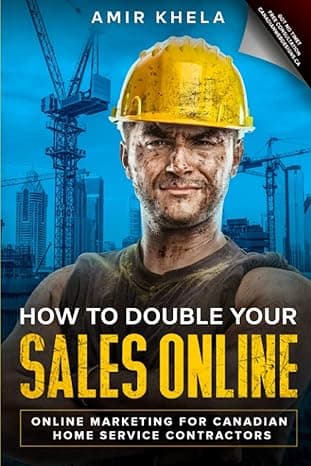
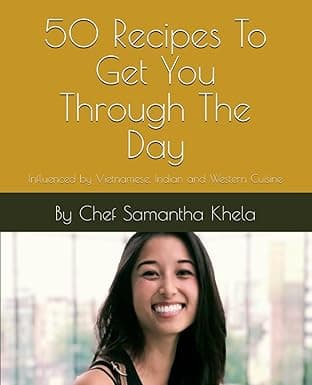
Books we’ve crafted are now available for purchase on Amazon, Links Below.

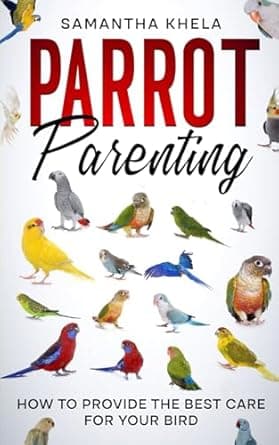
Parrot Parenting
Online Marketing
50 Recipes

Let's Connect
Contact Me

To Top
Contact

Get In Touch